Chronology
* You can search this page for a specific year or person by using the combination of the keys Ctrl F on your keyboard.

1890s
Although German immigrants continued to arrive in Australia, in this decade the numbers decreased, due to economic depression in Australia and improved employment prospects in the strong new Germany which had been united in 1871. The industrial boom in Germany required labour, and the Imperial Government in fact tried to discourage emigration from the Fatherland to Australia. However, between 1850 and World War I German settlers and their descendants remained the largest non-British group of Europeans in Australia.
1890
Hermann Heinicke, violinist and conductor, arrived in Adelaide. At the age of 10 he had entered the Dresden Conservatorium of Music. He established his own orchestra in Adelaide and in 1898 joined the staff of the newly-formed Adelaide College of Music.
1892
Up until the discovery of gold at Coolgardie in 1892, and especially at Kalgoorlie in 1893, Western Australia had never received many German settlers, compared to other Australian colonies. The huge gold rushes that started then brought some German-speaking adventurers to W.A. Most of them did not arrive from Europe, but were settlers travelling across from the eastern Australian colonies. In 1891 W.A. had only 290 Germans; by 1901 the number was 1522.
1893
Archduke Franz Ferdinand of Austria, heir to the Austrian throne (and whose assassination at Sarajevo in 1914 led to the start of the First World War), visited Australia and wrote approvingly of the country, though he noted the likelihood of it becoming an economic competitor for the Austro-Hungarian Empire in agriculture.
1896
In 1896 Helena Rubinstein arrived in Victoria and later established in Melbourne her cosmetics company which became a global beauty-products empire. Children in Queensland whom she looked after as a governess called her "Fräulein" because they knew she spoke German. Read more about Helena Rubinstein in Australia...
1898
The first Swiss Club in Australia, the Swiss Club of New South Wales, was established in approximately this year.
1900
Gustav Weindorfer, an Austrian immigrant who arrived in Australia at Melbourne in 1900, is best known for promoting the preservation of Cradle Mountain in the Central Highlands region of Tasmania, where he and his Tasmanian wife Kate encouraged sustainable nature tourism. Weindorfer promoted innovative eco-friendly travel practices and conservation initiatives, and his passion for the landscapes around Cradle Mountain led to the creation of the Cradle Mountain-Lake St. Clair National Park and inspired further conservation efforts in Tasmania.
➜ You can read more about Gustav Weindorfer here.
1911
On the 2nd December the Swiss lawyer and skiing champion Xaver Mertz from Basel left Hobart with Douglas Mawson's first Australasian Antarctic Expedition. He was the only non-English-speaking member of the party. After the tragic loss of the supplies down a crevasse, Mawson and Mertz eventually had to eat the husky dogs, and Mertz, who was more-or-less vegetarian, died from poisoning from the dogs' livers on 7 January 1913. Mawson gave Mertz's name to the glacier where Mertz died.
1914
The First World War broke out, striking a massive blow against German culture
and German-Australians, amidst the hysterical pro-war, pro-Britain euphoria.
➜ Here you can read why Australians went to war at the side of Great Britain so enthusiastically...
Australia's first shot in the war (and the British Empire's first shot) occurred on 5th August as Fort Nepean fired
across the bows of the Pfalz, a German merchant ship trying to escape
through Port Phillip Heads. The steamer was forced
to return to Melbourne.
➜ More on the famous 'first shot' and on the German captain...
On that day other German ships were trapped in Australian ports, including the S.S. Oberhausen at Port Huon in Tasmania.
Australian troops saw their first action and suffered
their first casualties when they captured the German garrison at Rabaul in the
German colony of Neubritannien in present-day Papua New Guinea.
➜ More on the Effects of the War on German Australians...
The Australian government banned immigration from Germany until 1925. In 1919 imports from Germany were banned for five years, though the ban was lifted two years before its expiry.
1920
Colin Thiele was born in Eudunda, South Australia, on November 16, 1920. Thiele was a celebrated Australian children’s author and educator who wrote more than 100 books, including Storm Boy and Blue Fin, and received the 'Companion of the Order of Australia' for his services to literature and education. His grandparents emigrated from Germany to South Australia in the 1850s, and their grandson Colin grew up bilingually in German and English on his parents' farm outside of Eudunda, north of the Barossa Valley. There was a strong German influence in the area, and in several stories such as Emma Kepler and Sun on the Stubble Thiele made use of the community traditions of the German-Australian rural culture of the Barossa Valley and neighbouring districts. In Sun on the Stubble the German background is not explicit, but many characters have German surnames and they occasionally use expressions such as "Gott im Himmel!", "mein Gott!", "schnell", "Quatsch pfui", "Donnerwetter" and "verdammt".
The University of South Australia named the library at the Magill campus after the author (the Thiele Library).
Thiele, Colin. & Ryan, Tony. & National Library of Australia. & Australian College of Education. & 5UV (Radio station : Adelaide, S.A.). (1995). Colin Thiele interviewed by Tony Ryan for the 'Conversations with Australian educators' oral history project. http://nla.gov.au/nla.obj-217273079 (ORAL TRC 3291/11) / Thiele, Colin. (1961). Sun on the Stubble. Dee Why West (NSW): Rigby Publishers. (paperback edition, reprinted 1985)
1928
Bert Hinkler, the son of a German-born stockman, made the first UK-Australia
solo flight, breaking the record of 28 days set in 1919 by Keith and Ross Smith.
Hinkler, who was born at Bundaberg in Queensland on 8th December 1892, completed
the journey in 16 days, flying Avro Avian G-EBOV
➜ You can read more about Bert Hinkler and his German background...
mid-1930s
Many refugees, intellectuals and German Jews fleeing persecution under Hitler's regime arrived in Australia, often via ports in other European countries or via North America.
1937

Swiss painter Sali Herman arrived at Melbourne. He had studied painting in Zürich and in Paris, and had travelled widely in Europe and America as an art dealer for 14 years before coming to Australia. He was an official war artist in the SE-Asia area in 1945-46. Some of his most popular paintings have been sympathetic images of Sydney slums and old buildings. Herman has also painted portraits and outback scenes. Winner of Australia's prestigious Wynne Prize for landscape painting in 1944, 1963, 1965 and 1967.

Walter Andreas Dullo from Königsberg in East Prussia arrived in Sydney with his wife on the Rendsburg on 11th September as a refugee fleeing from the Nazi Government in Germany. He was a trained lawyer, but the Nazi Government stopped him from working as a lawyer. Having brought with them second-hand chocolate-making machinery, he and his wife set up a chocolate business, and with his Austrian friend Richard Goldner he established a chamber music group. Later they founded the Sydney Musica Viva Society, with its first concert held on 8 December 1945. Musica Viva Australia is now the world's largest presenter of classical music, organising around 2,500 concerts each year across Australia and around the world, with performers ranging from soloists to chamber orchestras. Musica Viva also runs a successful program bringing live music performances into Australian schools. Walter Dullo was awarded the Order of Merit of the Federal Republic of Germany in 1977.
1938
Particularly after Germany's annexation (Anschluss) of Austria and up to the start of World War II, many Austrian refugees arrived via other European countries, North America or Asia. Many, though not all, were Jewish, or had a Jewish spouse, or simply had no wish to hang around in Hitler's Reich. Vienna had long had a reputation as a cultural centre of Europe, and many of these 38ers (as they were called) were professionals and intellectuals who contributed a lot to Australia's artistic and academic life after the war. Companies that were established after the war by 38ers, und that are household names in Australia include Red Tulip, Hestia and Vulcan. Sir Gustav Nossal, the immunologist and "Australian of the Year 2000", is the child of a 38er.
The Austrian Karl Anton Schwarz arrived in Sydney and set up an insurance business.
During the war he served in the Australian Military Forces. After the war he
played a key role in forming the Ski Tourer Association of the Australian Alps.
He and his fellow ski fans established Thredbo Village in the Alps, and he is
considered the "Father of Australian skiing." Sites on Australia's
ski fields that are named after him are: the Anton Ski-Run at Thredbo, the Anton-Hütte
at Mount Hotham, and Mount Anton in the Kosciusko National Park.
➜ You can read more about the influence of German-speaking migrants on ski resorts in Australia...
The German-Australian photographer Wolfgang Sievers (1913–2007) arrived in Australia. Born in Berlin, he had studied photography at the Contempora School of Applied Arts, but he opposed fascism and fled Germany when the Nazi regime conscripted him to be an aerial photographer for the Luftwaffe. Sievers served in the Australian Army from 1942-1946 before establishing himself as a professional photographer in Melbourne. His work focused on industrial and architectural subjects, using dramatic lighting and strong compositions to highlight the power and precision of modern industry. Sievers influenced Australia’s visual identity during the post-war period, promoting industry and technological progress. He is best known for his striking black-and-white photos of factories, machinery, and workers, which combined artistic vision with documentary detail. His photo Gears for Mining Industry, Vickers Ruwolt, Burnley, Melbourne (taken in 1967) was featured on a postage stamp in 1991, as part of a series of stamps produced by Australia Post for the 150th anniversary of photography in Australia (see the photo via the Art Gallery of NSW website). The newspaper Sydney Morning Herald described Sievers in 2007 as "one of the world's great industrial and architectural photographers, and a passionate campaigner for human rights." He was made an Officer in the Order of Australia in 2002.
Zuker, David & Jones, Barry (2007). "Titan's lens and moral compass enlightened all". The Sydney Morning Herald. August 20, 2007. Online here. Accessed 01/03/2025.
Apart from Wolfgang Sievers there were several other artists from Germany and Austria who arrived in Australia between 1938 and 1942 because of the rise of fascism in central Europe, for example: the German-born and trained photographers Helmut Newton (1920-2004, originally named Helmut Neustädter) and Henry Talbot (1920-1999, originally named Heinz Tichauer), and the Austrian-born photographer Margaret Michaelis (1902–1985, named Margarethe Gross at birth), as well as Ludwig Hirschfeld-Mack (1893–1965) and the married couple Karl (1903–1969) and Gertrude (1909–1984) Langer, who made contributions in art education.
1939
The world-famous Vienna Boys Choir was in Australia when war was declared and had to stay here. They were looked after by Melbourne's Catholic community. Only two of them chose to return to Austria after the war.
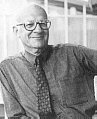
One of Australia's best-known composers, George Dreyfus (born in Elberfeld, now part of the city of Wuppertal), arrived in Australia at the age of 11 with his parents in order to escape persecution by Germany's Nazi government. He studied at the University of Melbourne Conservatorium of Music and became a bassoon player at Melbourne's Her Majesty's Theatre (1948-52) and in the ABC Melbourne Symphony Orchestra. He has composed music for film (around 35 Australian films) and television, most notably the Theme from Rush (a drama series set on the Victorian goldfields in the 1850s), operas, symphonies, much chamber music and music for children. Dreyfus received a scholarship in West Germany in 1955, and awards from UNESCO (1966), the Myer Foundation (1975), the Prix de Rome (1976), and from the Australia Council (1991) among others. In 1973 his Sextet for Didgeridoo and Wind Instruments was awarded best Australian piece of music, and this piece was performed in the German Pavilion at World Expo 2000 in Hanover on 9th October.
The start of the Second World War led to the internment of German citizens in Australia who were thought to be a security risk. During the war more than 1600 prisoners of war (POWs) were brought from Europe to Australia. They were held in camps at Tatura and Murchison in Victoria, at Barmera in South Australia and at Marrinup in Western Australia. After the war some of the German POWs decided to stay in Australia.
| Years | Arrivals |
|---|---|
| 1933-36 | 284 |
| 1937 | 871 |
| 1938 | 1743 |
| 1939 | 5583 |
| 1940 | 137 |
In 1939 the numbers of Germans and Austrians arriving in Australia to escape from Nazi persecution peaked; they included Jews and political opponents of the regime in Germany.