Victoria
JF Krummnow and the Herrnhut Commune
1) Krummnow in South Australia
2) In Victoria - founding of Herrnhut commune
3) Years of success
4) Hill Plain commune moves to Herrnhut
5) Krummnow's death
Krumnow organised the farmwork and daily routine of the members and preached regularly in the church.[1] The members of Herrnhut commune were committed to pacifism and to doing ‘good works’, and the commune was for many years a haven of security and was known for its hospitality.[2] ’Herrnhut became a kind of welfare agency, erecting a building especially for housing otherwise homeless people, who were welcome to stay at Herrnhut if they worked for their keep.’[3] Up to 30 homeless men are said to have been at Herrnhut at one time. Krumnow and his people also allowed displaced Aboriginals to live on their property, at one time providing a safe haven for 300 of them.
William Shannon was one of the few non-German members of Herrnhut, but he spoke German fairly well and stayed at Herrnhut for many years. He often acted as interpreter for the German-speaking Herrnhut members when they needed to interact with people outside the commune. He also translated Krummnow’s long sermons for English-speaking guests at Herrnhut.[4]
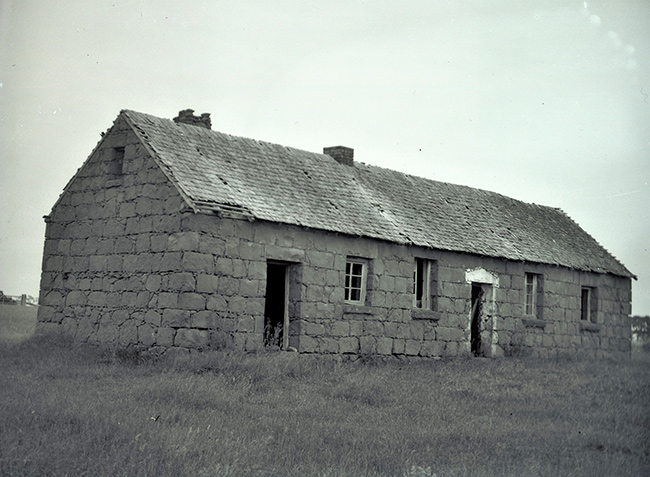
The communal kitchen and dining room in 1930
(Box 5: J. A. Lehmann Photograph Collection, St Michael's Lutheran Archives, Tarrington.)
Researchers Bill Metcalf and Elizabeth Huf described this black-and-white photo of the communal kitchen and dining room as follows: "The kitchen and bakery was on the left, with an off-set chimney over the baking oven. The communal dining room was entered through the middle door, and had a fireplace. A door at the far end of the building led into a small storeroom. When this photograph was taken in 1930, all the stone buildings had been abandoned and the iron roof had been removed, showing sadly deteriorating shingles."[5]
The members of the Herrnhut commune branded their cattle with the letters GH, for Gemeinde Herrnhut.[6] Krummnow was an excellent shearer and sometimes gave shearing lessons to local people.[7]
’The Herrnhut people produced most of their own food and wine, sold dairy products and fresh vegetables to workers in the goldfields, and made most of their money out of wool. They prospered and developed quite a comfortable lifestyle through the 1860s.’[8]
In the first few years everyone seemed happy to work for no pay in the interest of the commune. At its peak the commune numbered about 50 people. When it became known that Krummnow had registered the land purchased in his own name some people became very angry and demanded their money back, but it appears that they were forced to leave the community without anything. These people threatened court action, but there is no evidence that the issue ever reached the courts. As years passed more people were interested in a life beyond the commune and in earning money outside, and numbers shrank early in the 1870s as members began to age and die.
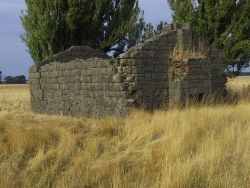
Ruins of Krummnow's house
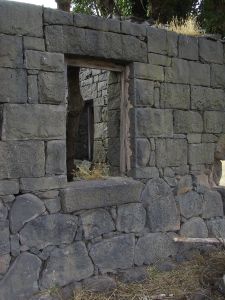
A window of Krummnow's house
♦ Notes:
1. Meyer (1978), p.206
2. Metcalf & Huf (2002), p.43
3. Huf, Betty. (2003). Courage, patience and persistence : 150 Years of German settlement in Western Victoria. Tarrington, Vic. : Sesquicentenary Committee, St Michael's Lutheran Church. p.123; Metcalf & Huf (2002), pp.43, 46.
4. Metcalf & Huf (2002), p.30
5. Metcalf & Huf (2002), photos between pp.82-83
6. Metcalf & Huf (2002), p.28
7. Meyer (1978), pp.205-206
8. Huf (2003) Courage, patience and persistence. p.123
♦ Information summarised from:
Huf, Betty (2001, January). Personal communication (local historian).
Metcalf, Bill, & Betty Huf (2002). Herrnhut. Australia's First Utopian Commune. Carlton Sth (Victoria): Melbourne University Press.
Lodewyckx, Prof. Dr A. (1932). Die Deutschen in Australien. Stuttgart: Ausland und Heimat Verlagsaktiengesellschaft. pp.137-144
Meyer, C. (1978). Two Communes in 19th Century Victoria. In: Victorian Historical Journal, Vol. 49, (No.4).