Bert Hinkler
Aviator
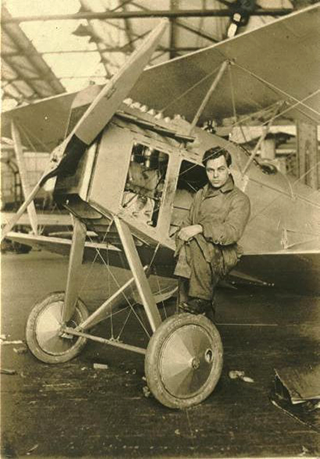
Hinkler in England
Photo courtesy of the Hinkler Hall of Aviation
The Hinkler family, from Hörnsheim (in the present-day district named Lahn-Dill-Kreis, about 65km north of Frankfurt-am-Main) boarded a ship at Hamburg. Johann Wilhelm Hinkler, 10 years old, left Germany with his mother Anna and step-father Ludwig on 5th August 1865 on the ship La Rochelle from Hamburg bound for Queensland. Johann's one-year-old stepbrother Ludwig junior died of fever on 20th December during the last part of the journey to Queensland. During the journey another stepbrother, Wilhelm Volk, was born.[1]
Johann had various jobs in southeastern Queensland, working as a stockman, bush carpenter, handyman and labourer.[2] Johann's son Bert (born at Bundaberg on 8th December 1892) and his two siblings called their German father Papa.[3] "One of the most inspiring tales for Bert was that of the 'Glider King' Otto Lilienthal, who like Papa Hinkler was also Prussian and built an artificial hill outside Berlin from which he could launch his hang gliders."[4] Hinkler designed, built and flew his own early gliders as a young man in Queensland.
In 1913 Hinkler sailed to England and worked for the Sopwith Aviation Company. During the First World War he flew with the Royal Naval Air Service as a gunner/observer in Belgium and France and won the Distinguished Service Medal. After the war the aircraft manufacturer A.V. Roe in Southampton (England) employed him as a test pilot.
Roy Chadwick, chief designer for A. V. Roe met Hinkler in 1919 and later said: “It was apparent even during our first talk that Hinkler was an outstanding personality; he had done a lot of flying during the war, but in addition he had a very fertile and inventive brain. When he was flying, Bert Hinkler concentrated on the job in a way I have not seen in any other pilot.”[5]
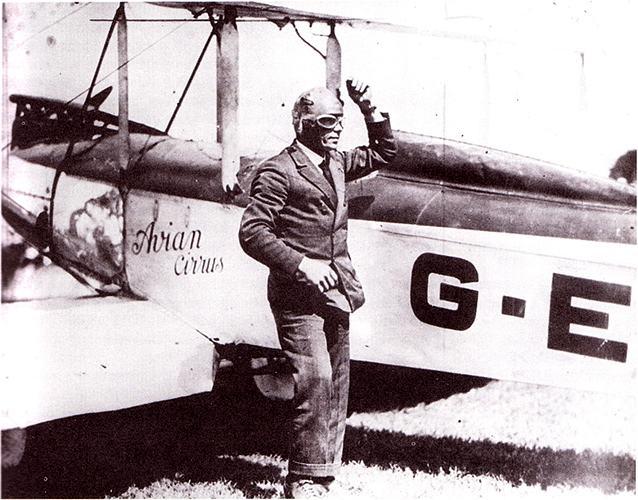
Bert Hinkler and his Avro Avian in 1928
Photo source: unlisted, Public domain, via Wikimedia Commons

During the 1920s Hinkler competed in many aviation competitions and races. He flew the first solo flight between England and Australia, departing England on 7 February 1928 and arriving in Darwin on 22 February. This solo flight by Hinkler, in his Avro Avian plane G-EBOV, took 16 days, breaking the record of 28 days set in 1919 by Keith and Ross Smith.
In 1928 few names in aviation shone as brightly as that of Bert Hinkler.[6]
Mal Walden
In 1931 he achieved the first solo flight across the South Atlantic Ocean. Without a co-pilot, radio equipment, navigation help, or a financial sponsor, Hinkler completed two separate journeys halfway around the world, relying on nothing more than a compass, a page from an atlas on his lap, and a pocket torch in case of any landing in the dark.[7]
In January 1933 Hinkler started another flight from England to Australia, but he died when his plane crashed on the slopes of a mountain range in Tuscany, Italy. His grave is in Florence, Tuscany.
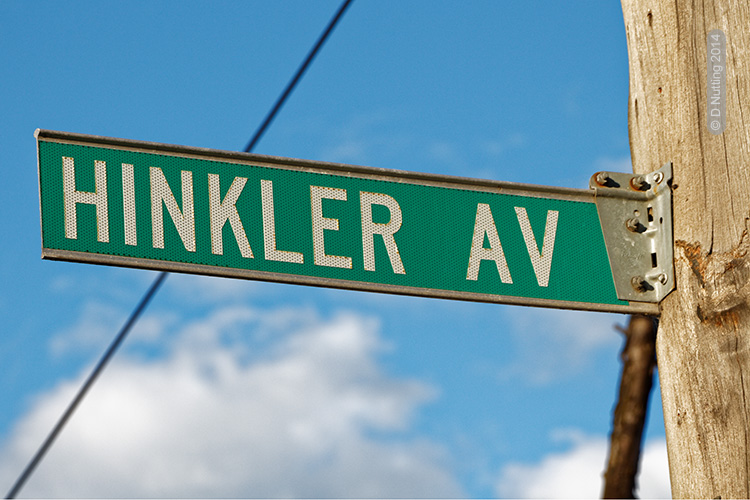
Hinkler's name is commemorated by parks and streets in Queensland and elsewhere. This is Hinkler Avenue in East Bentleigh in Victoria, Australia.
The Australian airline Qantas named an Airbus A380 after the aviator, with his name featured on the aircraft. The Division of Hinkler is a federal parliamentary electorate in Queensland. The division was created in 1984 and was named after Bert Hinkler. The electorate is located in coastal Queensland, including the towns of Bundaberg, Hervey Bay, Childers, Gayndah and Monto.
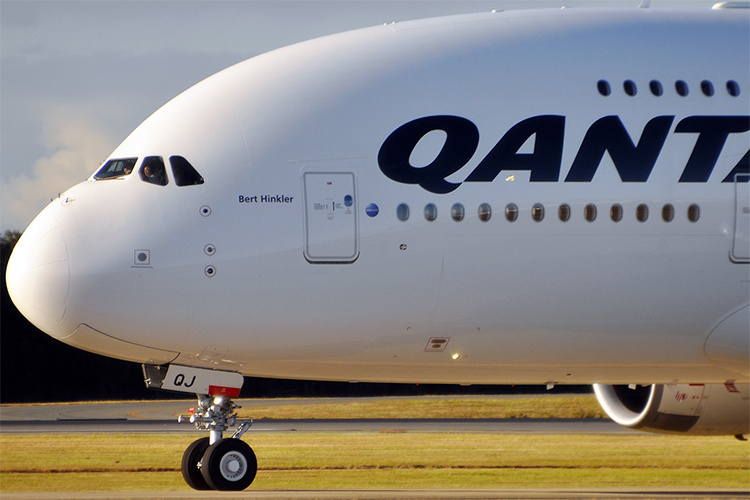
Qantas Airbus A380-842 VH-OQJ, named 'Bert Hinkler', at Brisbane Airport, 2011
Photo source: Robert Frola (GFDL or GFDL), via Wikimedia Commons
.jpg)
♦ Notes:
1. Kieza (2012), p.7 & 9
2. Kieza (2012), p.11
3. Kieza (2012), p.15
4. Kieza (2012), pp.21-22
5. Kieza (2012), p.184
6. Walden, Mal. (2024). Box Kites to Boeings: The Sky-High Heroes of Aussie Aviation. Melbourne: Brolga Publishing. p.42
7. Kieza (2012), p.3
♦ References:
Kieza, Grantlee. (2012). Bert Hinkler: the most daring man in the world. Sydney (N.S.W.): ABC Books division of HarperCollins Publishers.
Wixted, E. P. (1983). Hinkler, Herbert John Louis (Bert) (1892 - 1933). Australian Dictionary of Biography, Volume 9. Carlton: Melbourne University Press. pp. 305-307