Missionaries
Hermannsburg Mission
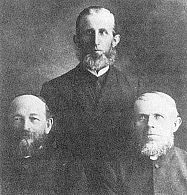
The Hermannsburg Lutheran Mission was established in 1877 on the Finke River in the centre of the continent by W.F. Schwarz, from Württemberg, L.G. Schulze from Saxony and A.H. Kempe, from Dauben near Dresden (see photo at left). They had headed north from Bethany in the Barossa Valley and experienced great hardship in setting up an economically viable community in the heat of central Australia. From 1894-1922 it was led by Carl Strehlow who gained a reputation as an expert on the mythology and language of the Aborigines of that area. He developed a written form for the Aranda language, produced an Aranda grammar, an Aranda dictionary, and translated the New Testament into Aranda. He became skilful in treating the sick and the Aborigines trusted him.
Carl Strehlow's son Theodore, who grew up in close contact with the Aranda people and preferred living in that part of Australia, completed university studies in Adelaide and returned to the Aranda in 1933. He developed a huge collection of anthropological items and his work influenced anthropological studies in other parts of the world.
Ownership of Hermannsburg's facilities was handed over to the Aranda people in 1982, and now includes Aboriginal villages such as Wallace Rockhole where alcohol is banned by the inhabitants. Albert Namatjira, the first Aboriginal artist to become famous painting in the Western style, grew up at Hermannsburg.
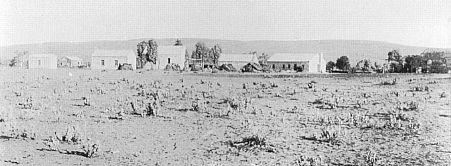
Early photo of the mission
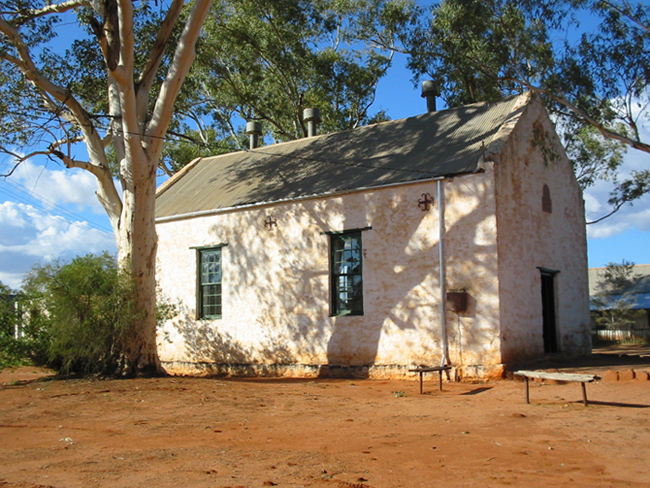
Hermannsburg Lutheran church, Northern Territory, Australia (built 1877).
Photo source: "Hermannsburg NT" (2004) by Cgoodwin - own work. Licensed under CC BY 3.0 via Wikimedia Commons.

Information about the Lake Killalpaninna Mission
Information about the Ebenezer Mission